Introduction
Custom packaging for small business owners often feels out of reach. Many suppliers require large minimum orders, steep upfront costs, or long production timelines that just don’t work for a growing brand. The good news is that custom packaging for small business has become far more accessible in recent years, and small brands no longer need enterprise-level budgets to look professional. This guide breaks down exactly how to approach it.
Why Small Businesses Hesitate to Go Custom
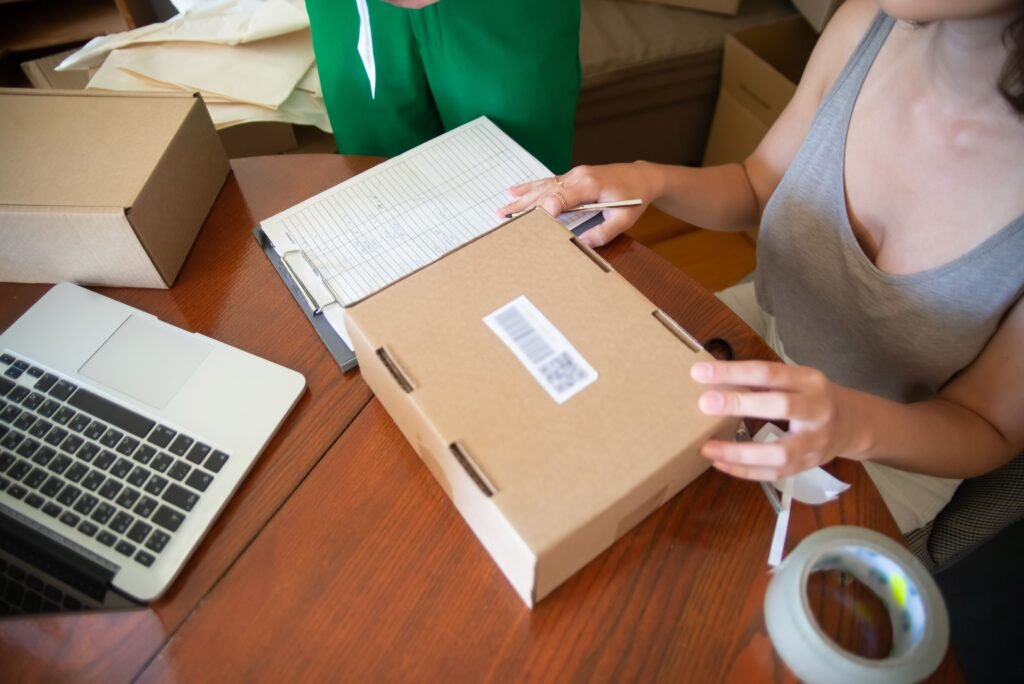
Many small business owners assume custom packaging means large minimum orders, expensive tooling fees, and long lead times. That used to be true when packaging was dominated by large industrial suppliers. Today, digital printing and smaller-scale manufacturing have made low minimum order quantities (MOQs) widely available, which has changed the equation for small brands entirely.
What “Custom” Actually Means at a Small Scale
Custom packaging doesn’t have to mean a fully unique box shape or elaborate finishes. For most small businesses, “custom” simply means:
- Your logo printed on the box or on branded tape
- A color scheme that matches your brand
- A box size that actually fits your product (instead of generic oversized packaging)
- Small interior touches like tissue paper or a thank-you card
These small changes already separate a brand from competitors using plain, unbranded boxes.
Budget-Friendly Ways to Start
Start With Branded Tape Instead of a Fully Printed Box
A plain kraft or corrugated box with custom printed tape creates a branded look for a fraction of the cost of a fully printed exterior.
Use a Single Print Color
Full-color printing costs more than single-color printing. A clean, one-color logo on kraft material often looks more polished than an overly busy design.
Order in Smaller Batches
Look specifically for suppliers offering low MOQs. This lets you test packaging designs without committing to thousands of units before you know what works.
Add Small Personal Touches Instead of Structural Changes
A printed thank-you card or a discount code insert costs very little compared to custom box shapes, but still creates a memorable unboxing moment.
When It’s Worth Spending More
As your order volume grows, certain upgrades start to pay for themselves:
- Fully printed exteriors become more cost-effective per unit at higher volumes.
- Rigid boxes make sense once you’re selling higher-priced items where packaging is part of the perceived value.
- Custom inserts are worth it once damaged-in-transit complaints start affecting your margins.
The key is scaling packaging investment alongside your order volume, not before it.
Questions to Ask a Packaging Supplier
Before committing to a supplier, small business owners should ask:
- What is your minimum order quantity, and does it apply per design or per order?
- What is the typical turnaround time from approval to delivery?
- Can I get a physical sample before placing a bulk order?
- Are there setup or tooling fees for custom printing?
- Do you offer support for first-time packaging buyers who aren’t sure what they need?
A supplier that answers these clearly and doesn’t push you toward unnecessary upgrades is usually a good sign.
Common Mistakes Small Businesses Make
Ordering too much too soon. Committing to a huge quantity before testing a design with real customers can leave you stuck with boxes that don’t work as well as expected.
Choosing the cheapest option without checking quality. A slightly higher price for consistent print quality and reliable material often pays off in fewer customer complaints.
Skipping samples. Photos rarely show true color accuracy or material feel. A small sample order avoids costly surprises on a bulk run.
Overdesigning too early. Elaborate custom shapes and finishes can wait until the business has validated demand and pricing can support the added cost.
Real Examples of Low-Cost Custom Packaging Upgrades
Sometimes the easiest way to understand affordable customization is through examples. A candle brand selling online might skip a fully printed box entirely and instead use a plain kraft box with a single circular sticker featuring their logo a change that costs pennies per unit but immediately makes the packaging feel intentional rather than generic. A skincare brand on a tight budget might print their logo in one color directly onto the box exterior, paired with tissue paper in their brand color, rather than paying for a full-color printed design. A small accessories brand shipping jewelry might use a plain corrugated mailer on the outside since customers never see it while spending their packaging budget on a nicely printed inner box that creates the actual unboxing moment.
These examples share a common thread: the money is spent where the customer will actually notice it, not evenly across every surface of the packaging. This is one of the most effective mindset shifts for small businesses trying to look premium without a premium budget.
How to Plan Your First Custom Packaging Order
Step 1: Define What “Custom” Means for Your Brand
Before contacting a supplier, decide which one or two elements matter most: Is it the logo? The color? A specific box size? Trying to customize everything at once usually increases cost the most; picking priorities keeps the budget under control.
Step 2: Request Samples Before Committing
Most suppliers offering low MOQs will also provide sample units or digital proofs before a full production run. Always review a physical sample if possible screen colors and printed colors often look different.
Step 3: Start With a Small Test Order
Rather than ordering thousands of units immediately, place a smaller order first. This limits financial risk and gives you real customer feedback before scaling up.
Step 4: Track What Customers Notice
Pay attention to unboxing photos, reviews, and social media mentions after your first custom packaging run. This tells you whether the investment is actually influencing how customers perceive your brand.
Frequently Asked Questions
How much does custom packaging cost for a small business?
Costs vary widely depending on material, print method, and order size, but budget-friendly options like branded tape on plain boxes or single-color kraft printing can start at just a few cents per unit at moderate volumes.
What is a typical minimum order quantity for custom packaging?
This depends on the supplier, but many packaging companies now offer MOQs as low as 50–100 units, especially for digitally printed designs, making it realistic for small businesses to order.
Is custom packaging worth it for a small or new business?
Even small branding touches a logo, a consistent color, a thank-you card can meaningfully improve how professional a brand feels to customers, often making it worth the modest additional cost.
Final Thoughts
Custom packaging for small business is no longer reserved for brands with large budgets. With low MOQs, digital printing, and simple branded touches, small businesses can create a professional, memorable customer experience without overspending. Start small, test what resonates, and scale your packaging investment as your business grows.
Looking for packaging that fits a small business budget? Get a custom quote or explore our Kraft Boxes and Cardboard Boxes for affordable, low-MOQ options.